For Bangladesh, the most telling numbers at Kasugai Country Club were not the final positions alone. They were the fluctuations between rounds: a promising score followed by a costly setback, a recovery arriving after the medal race had moved beyond reach. Across four days in Japan, the Asian Games offered a demanding assessment of where the country’s golf stands.
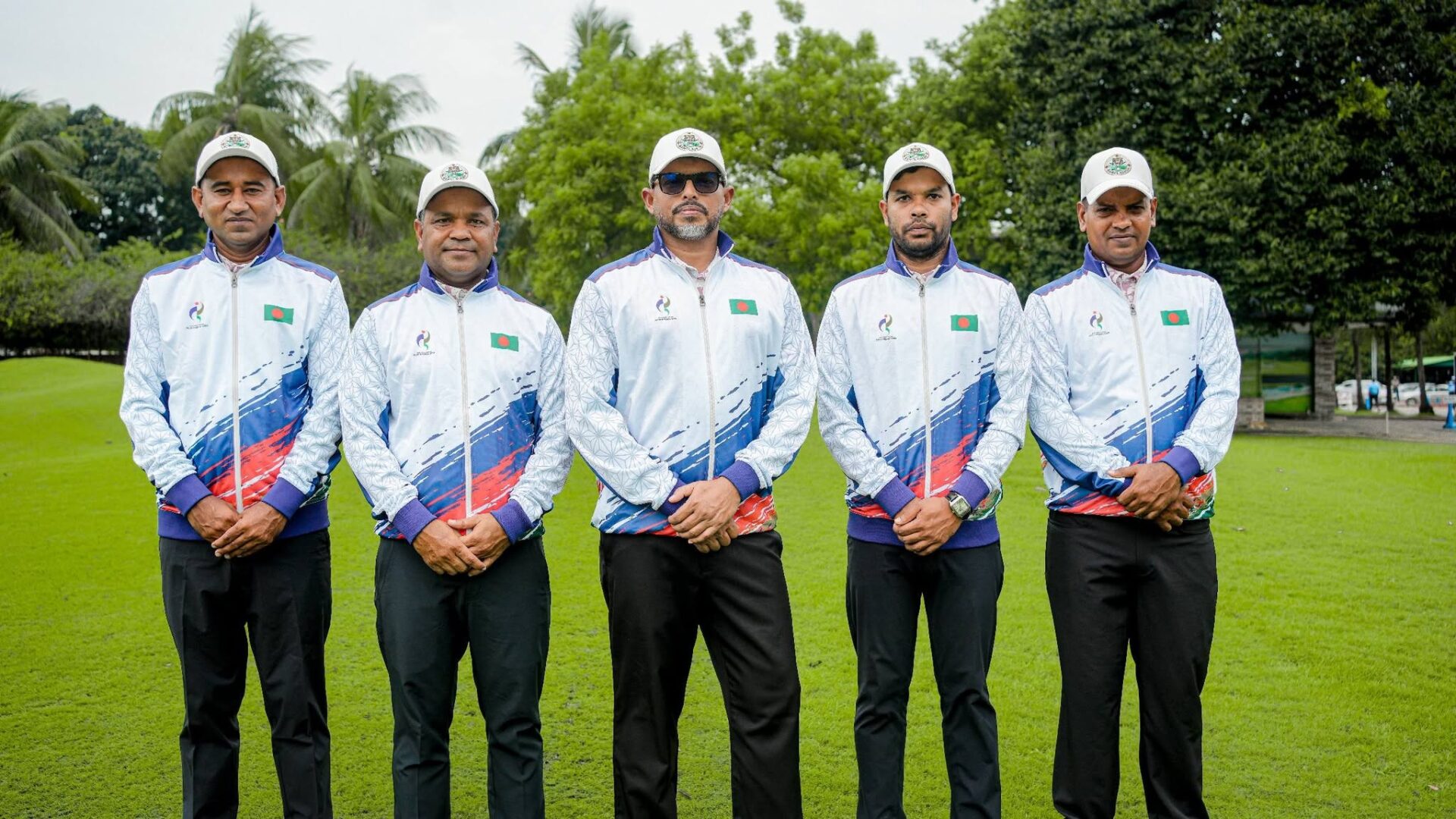
Bangladesh finished 11th in the men’s team event at the Aichi-Nagoya Games, with Siddikur Rahman leading its three-member side. The competition, held from September 30 to October 3, ended with South Korea’s Tom Kim taking individual gold and China winning the men’s team title. For Bangladesh, the outcome brought disappointment, but also specific lessons beyond the familiar appeal for greater exposure.
Bangladesh’s rounds reveal the challenge
Siddikur closed with a one-under-par 69 to finish tied for 27th on 282, two over par. His rounds of 69, 71, 73 and 69 showed an encouraging response on the final day, although the third-round setback had already limited his prospects. Bangladesh’s leading performer finished 20 strokes behind Kim, a gap that puts the scale of the challenge into perspective.
Badal Hossain’s tournament followed a sharper rise and fall. A second-round 68 lifted his campaign, but a 76 the following day surrendered much of that progress. He recovered with a closing 70 to finish tied for 33rd on 285, five over par. His best round demonstrated scoring potential; the challenge was carrying that standard through the entire competition.
Jamal Hossain Mollah also produced a second-round improvement, returning 69 after an opening 75. However, rounds of 74 and 75 left him tied for 35th on 293, thirteen over par. Taken together, the Bangladeshi scorecards suggest that the central issue was sustaining competitive golf across 72 holes. Individual good rounds could not compensate fully for the damage elsewhere.
That distinction matters in a team competition where the best two scores count each day. A strong individual performance needs support, and a difficult round becomes more expensive when teammates cannot provide sufficient cover. Bangladesh’s campaign therefore deserves examination as a collective effort, rather than another verdict resting primarily on Siddikur’s shoulders. Greater depth would make the side less vulnerable to sudden reversals.
Consistency at the top of the leaderboard
At the top of the leaderboard, Kim supplied the sustained improvement Bangladesh needed. His rounds of 67, 66, 65 and 64 produced an eighteen-under-par total of 262. Japan’s Kazuki Higa, China’s Ding Wenyi and Thailand’s Sadom Kaewkanjana finished three strokes behind. Higa took silver after a playoff, with Sadom claiming bronze. Kim’s victory also secured exemption from South Korea’s mandatory military service.
China’s team gold added a different dimension to the tournament. South Korea took silver and Japan bronze, a reminder that producing the individual champion does not automatically deliver the strongest team. For Bangladesh, the relevance is straightforward: building a competitive national side requires several golfers capable of contributing consistently. One established player cannot be expected to absorb every shortfall over four rounds.
Regional progress in the women’s competition
The women’s event offered a compelling counterpoint to the established names. India’s Pranavi Sharath Urs won individual gold on 265, fifteen under par, becoming the first Indian woman to claim the title.
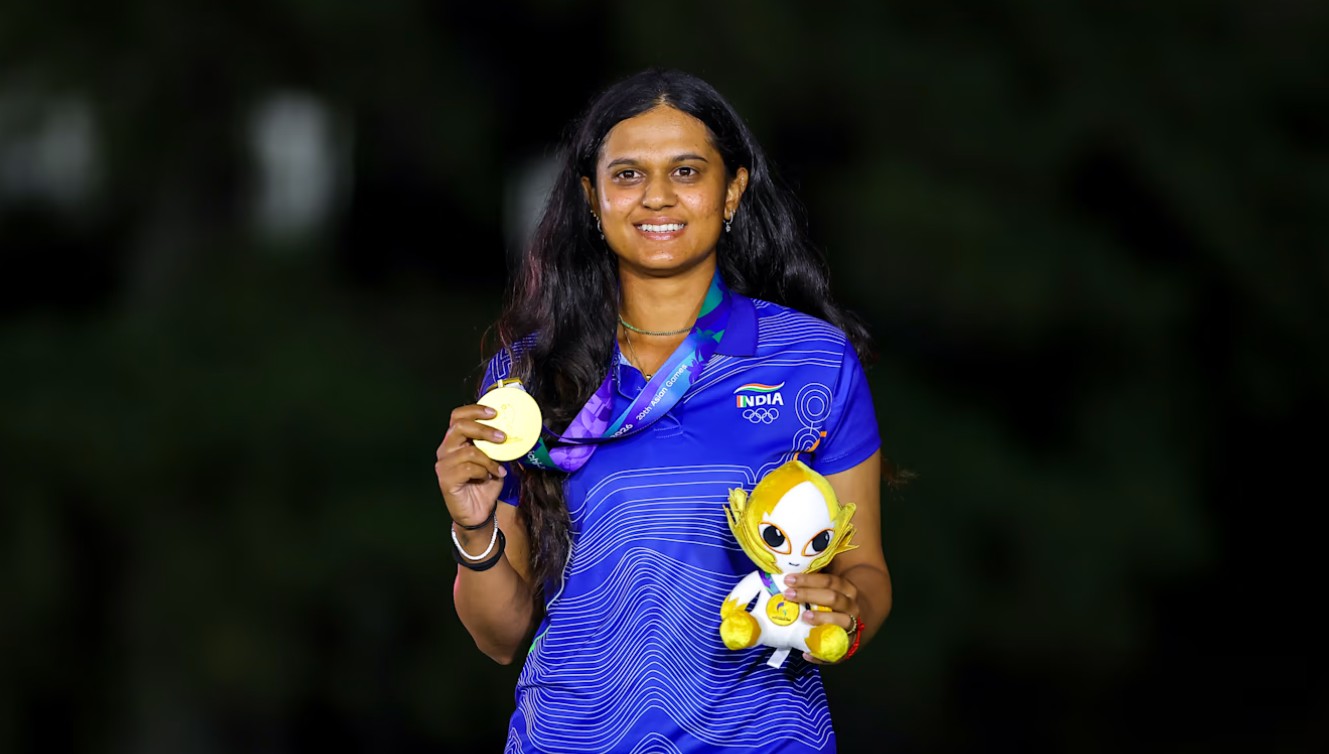 Indian golfer Pranavi Urs won India’s first-ever women’s individual golf gold medal at the 20th Asian Games (Aichi–Nagoya 2026) in Japan
China’s Yin Ruoning took silver and Singapore’s Shannon Tan bronze. Urs recovered from a final-round triple bogey to protect her advantage, demonstrating the value of composure when a tournament threatens to unravel.
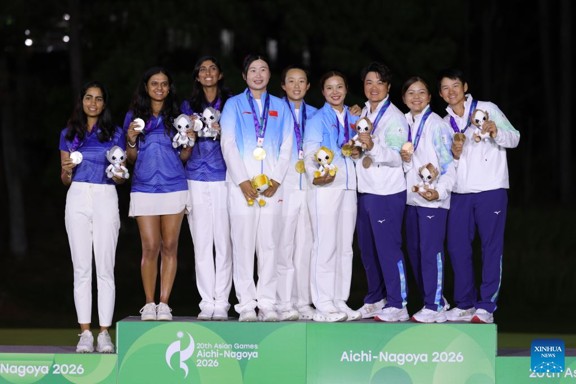
China, India and Chinese Taipei won women’s team gold, silver and bronze respectively
China also won women’s team gold, while India secured silver and Chinese Taipei bronze. India’s success should interest Bangladesh because it places a regional achievement alongside the continent’s established golfing powers. It provides encouragement without making the route to medals appear easy. Breakthroughs require players who can withstand pressure, recover from mistakes and compete effectively against opponents with stronger international credentials.
Turning results into a preparation plan
For Bangladesh, a useful review must now move from results to preparation. Coaches and players should examine where strokes were lost, whether course management contributed to the expensive rounds, and how practice can address those weaknesses. The available scores identify inconsistency; they do not establish its causes. That distinction should guide the assessment and prevent broad assumptions from replacing a proper technical review.
The longer task is to give emerging golfers a clearer route from domestic competition to demanding international fields. Regular competitive opportunities, purposeful coaching and support for junior development would strengthen that progression. Siddikur’s continued presence remains valuable, but Bangladesh needs more players able to share the responsibility. Kasugai should become a reference point for that work, with progress measured through scoring, consistency and stronger team performances.
An eleventh-place finish deserves neither celebration nor dismissal. It records Bangladesh’s position in this competition and leaves a practical question for those shaping its future: what will change before the next major test? The answer will determine whether these four days remain another experience gained, or become the starting point for a more competitive Bangladesh team. Preparation must begin while lessons remain fresh.