Royal Birkdale’s history is closely tied to the story of The Open Championship. Since first hosting the event in 1954, the course has staged the championship ten times and is scheduled to welcome the world’s best golfers again in 2026.
Set along England’s renowned Golf Coast in Southport, Royal Birkdale Golf Club stands among the most respected links courses in world golf. Overlooking the windswept coastline of the Irish Sea, the course has become synonymous with championship golf, traditional design and a deep respect for the heritage of the game. As a regular host of The Open Championship, Royal Birkdale has built a reputation as one of the fairest yet most demanding tests in the sport.
The architectural identity of Royal Birkdale reflects the influence of three generations of the Hawtree family of golf course architects. Their work carefully shaped the course around the natural dune landscape, creating a routing that flows through broad valleys.
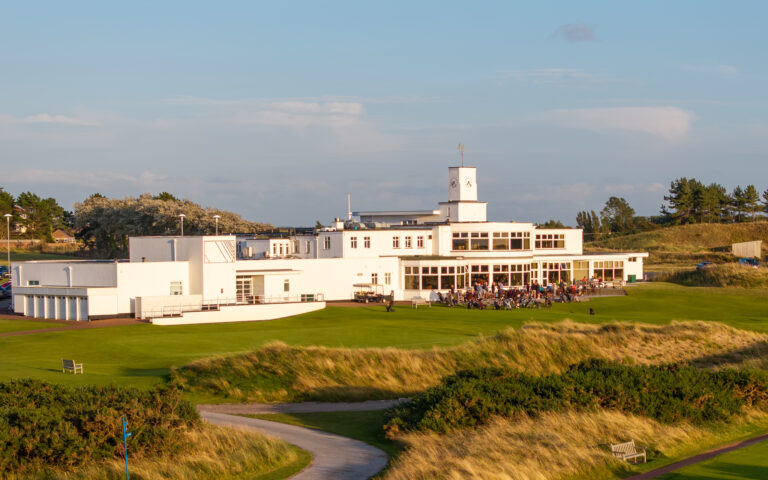
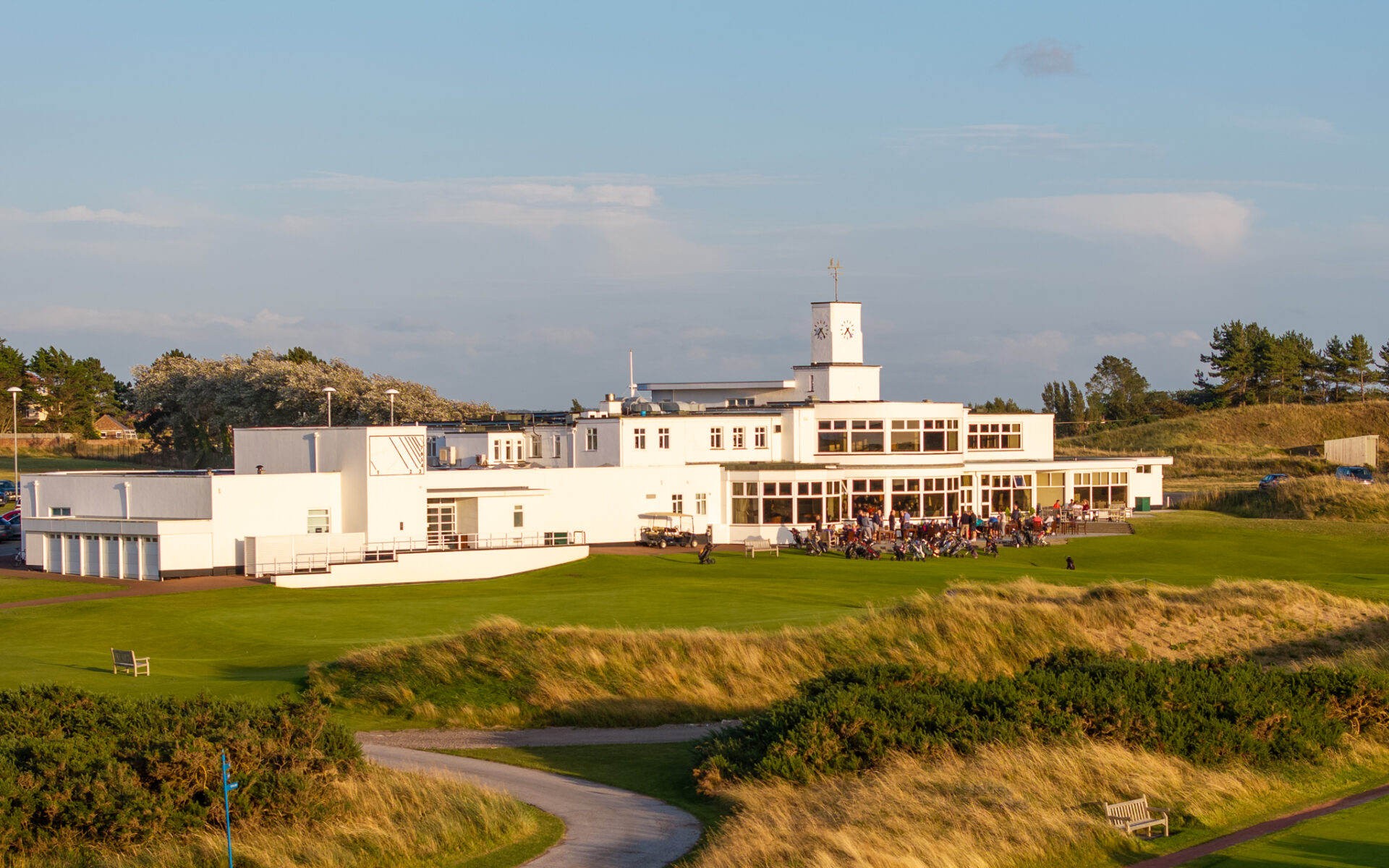
Founded in 1889 as Birkdale Golf Club, the course moved to its present site within the dramatic Birkdale Hills in 1894. Its iconic Art Deco clubhouse, completed in 1935, remains one of the most distinctive structures in British golf. In recognition of its growing prestige and contribution to the sport, the club received Royal status in 1951. Only a few years later, the venue hosted its first Open Championship in 1954, establishing a tradition that continues today.
Royal Birkdale has hosted many prestigious international competitions beyond The Open. Among them, the Ryder Cup visited the course in 1965 and again in 1969.
Design & Architecture
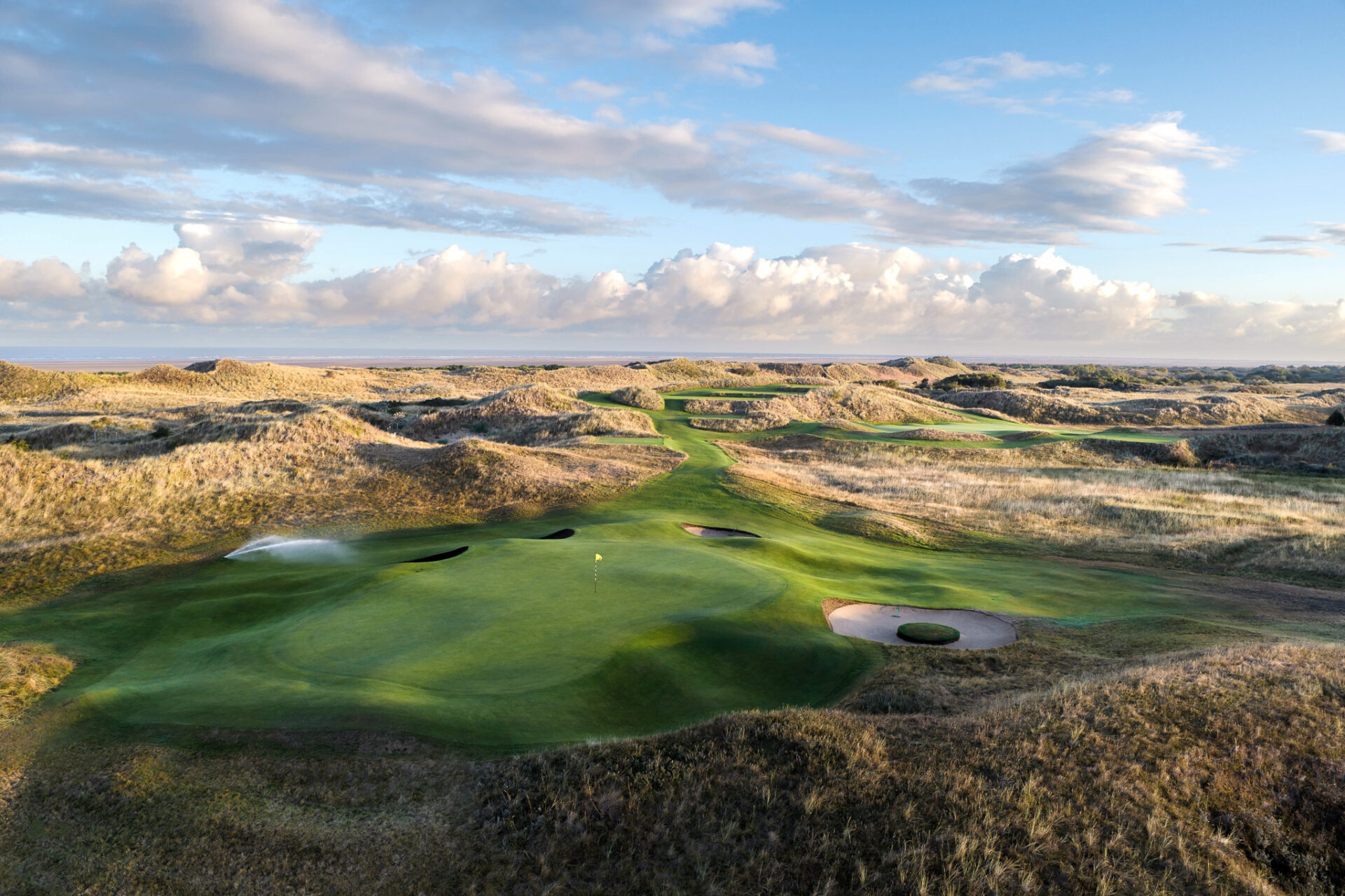
The architectural identity of Royal Birkdale reflects the influence of three generations of the Hawtree family of golf course architects. Their work carefully shaped the course around the natural dune landscape, creating a routing that flows through broad valleys while maintaining strong strategic angles into greens. Unlike many historic links courses that rely heavily on blind shots, Royal Birkdale offers clear visual corridors from tee to fairway, enhancing both playability and spectator viewing during major championships.
The course features strategic fairway corridors that appear generous from the tee but demand precise positioning. Subtle slopes guide errant drives into deep bunkers or awkward lies, while correctly placed tee shots open the ideal angles into greens. The design rewards thoughtful course management rather than pure power.
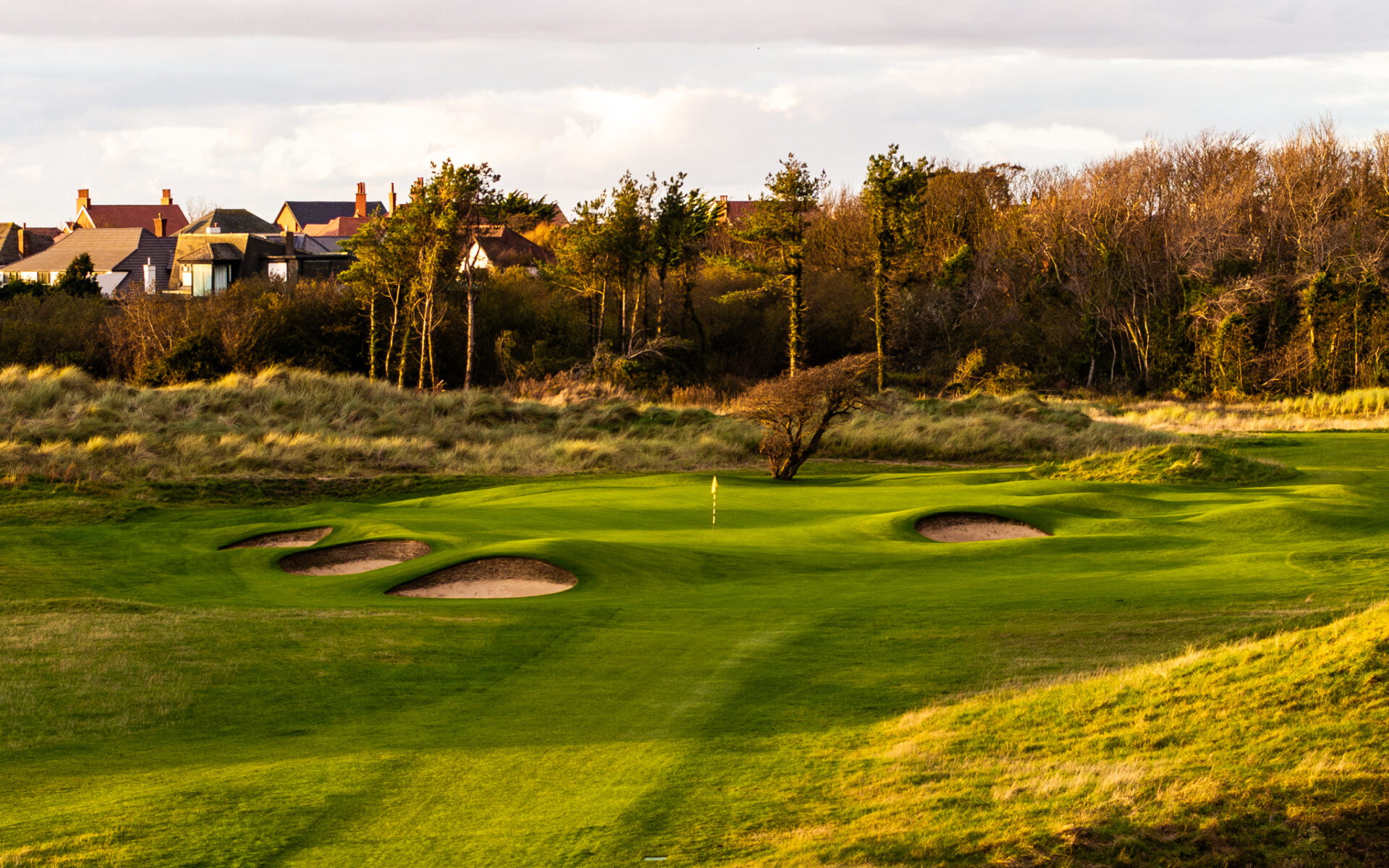
Another defining element of the course is its network of deep pot bunkers, which serve as some of the most formidable hazards in links golf. These steep-sided bunkers frequently force players to play conservatively when recovering, emphasizing the importance of accuracy from the tee and fairway.
The championship greens at Royal Birkdale are slightly raised and well protected by natural contours and bunkering. Approaches must be carefully controlled, as missed targets often roll into tight run-off areas where delicate recovery shots are required.
Above all, the ever-present coastal wind remains the course’s most influential defence. Blowing across the dunes from the Irish Sea, the wind constantly alters playing conditions. Club selection becomes a strategic decision throughout the round, and adaptability is essential for success.
Championship Heritage
Royal Birkdale’s history is closely tied to the story of The Open Championship. Since first hosting the event in 1954, the course has staged the championship ten times and is scheduled to welcome the world’s best golfers again in 2026.
The list of champions at Royal Birkdale includes some of the most celebrated names in the game. Arnold Palmer claimed victory in 1961, helping elevate the global profile of The Open. Lee Trevino triumphed in 1971 with his trademark creativity, while Tom Watson secured one of his five Open titles here in 1983.
Later champions include Mark O’Meara in 1998, Pádraig Harrington in 2008, and Jordan Spieth in 2017, whose dramatic victory added another memorable chapter to the course’s history.
During that same 2017 championship, Branden Grace produced one of the most remarkable performances in major championship golf by recording a third-round 62, the lowest round ever achieved in a major at the time.
Founded in 1889 as Birkdale Golf Club, the course moved to its present site within the dramatic Birkdale Hills in 1894. Its iconic Art Deco clubhouse, completed in 1935, remains one of the most distinctive structures in British golf.
Historic Moments
Royal Birkdale has hosted many prestigious international competitions beyond The Open. Among them, the Ryder Cup visited the course in 1965 and again in 1969.
The 1969 match produced one of golf’s most iconic gestures of sportsmanship. On the final green, American legend Jack Nicklaus conceded a short putt to Britain’s Tony Jacklin, ensuring the contest ended in a 16–16 tie. The moment later became known across the sporting world as “The Concession.”
The course has also hosted the Walker Cup, Curtis Cup, and the Senior Open Championship, demonstrating its versatility as a championship venue across multiple formats of the game.
The Playing Experience
Playing Royal Birkdale offers a classic links experience where patience and strategic thinking define success. The course unfolds naturally through towering dunes, presenting a sequence of holes that reward thoughtful positioning from the tee.
The front nine gradually moves outward through the dunes before turning back toward the clubhouse. Fairway bunkers and natural ridges influence driving lines, ensuring that players must carefully consider placement rather than distance alone.
The back nine increases the level of challenge, particularly as players encounter several demanding approach shots and strategic risk-reward opportunities. The par-five 15th, for example, can offer scoring chances but quickly punishes misjudgment.
The closing holes build towards a dramatic finish as the course rises gently toward the famous Art Deco clubhouse. The final hole provides a fitting stage for championship golf, where calm decision-making and precise execution often determine the outcome.